

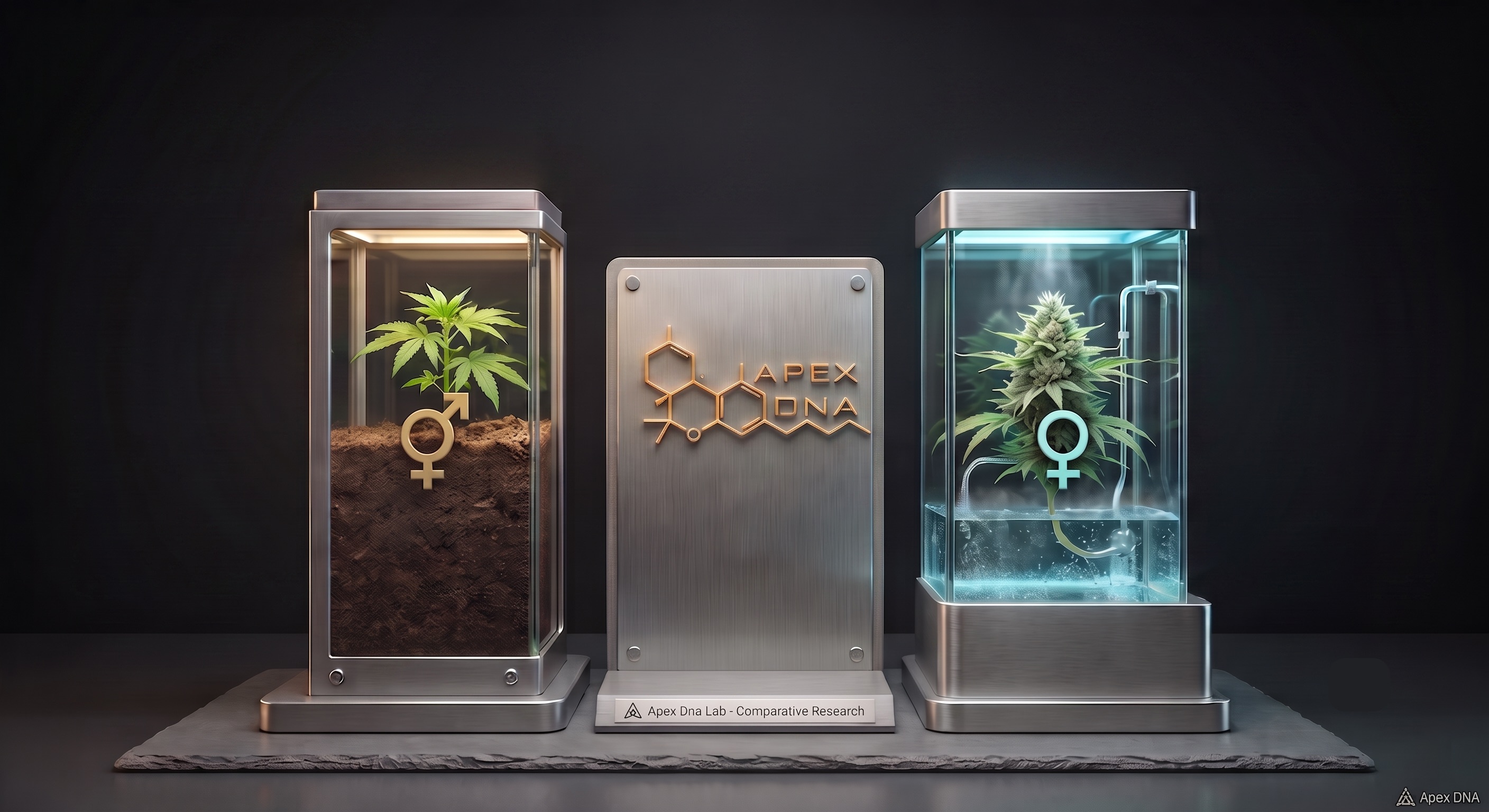
Among the first choices a collector meets is a simple-sounding one: regular or feminized seeds. The words describe how the seed was produced and what it can become — and for anyone thinking about genetics rather than a single grow, the distinction runs deeper than it first appears.
Regular seeds
Regular seeds are the product of a natural cross between a male and a female plant, and they can grow into either sex. That mix is exactly what a breeder needs: males are essential for making crosses, and the full genetic range of a population lives in regular seed. For preservation and breeding work, regular seed is the foundation.
Feminized seeds
Feminized seeds are bred to produce female plants. They're made without a conventional male, typically by inducing a female plant to produce pollen. For a grower focused on flower rather than breeding, feminized seed removes the step of sorting out males.
Why it matters for genetics
The choice reflects intent. A collector preserving and working a lineage values regular seed, because it carries the complete genetic picture and the males a breeding programme depends on. Feminized seed serves a different, narrower purpose. Neither is "better" — they answer different questions, the same way an IBL and an F1 do.
- Regular: male or female; the full genetic range; the breeder's material.
- Feminized: female-only; bred for a single purpose.
See how our genetics are presented in the catalogue, or read more on what makes a line worth preserving in the IBL guide.