
Every cannabis genetic carries a chemical signature — a balance of cannabinoids that helps define what the line is. Three names come up most often: THC, CBD and CBG. Understanding them as genetic markers, not marketing buzzwords, is part of reading a variety honestly.
The molecules, briefly
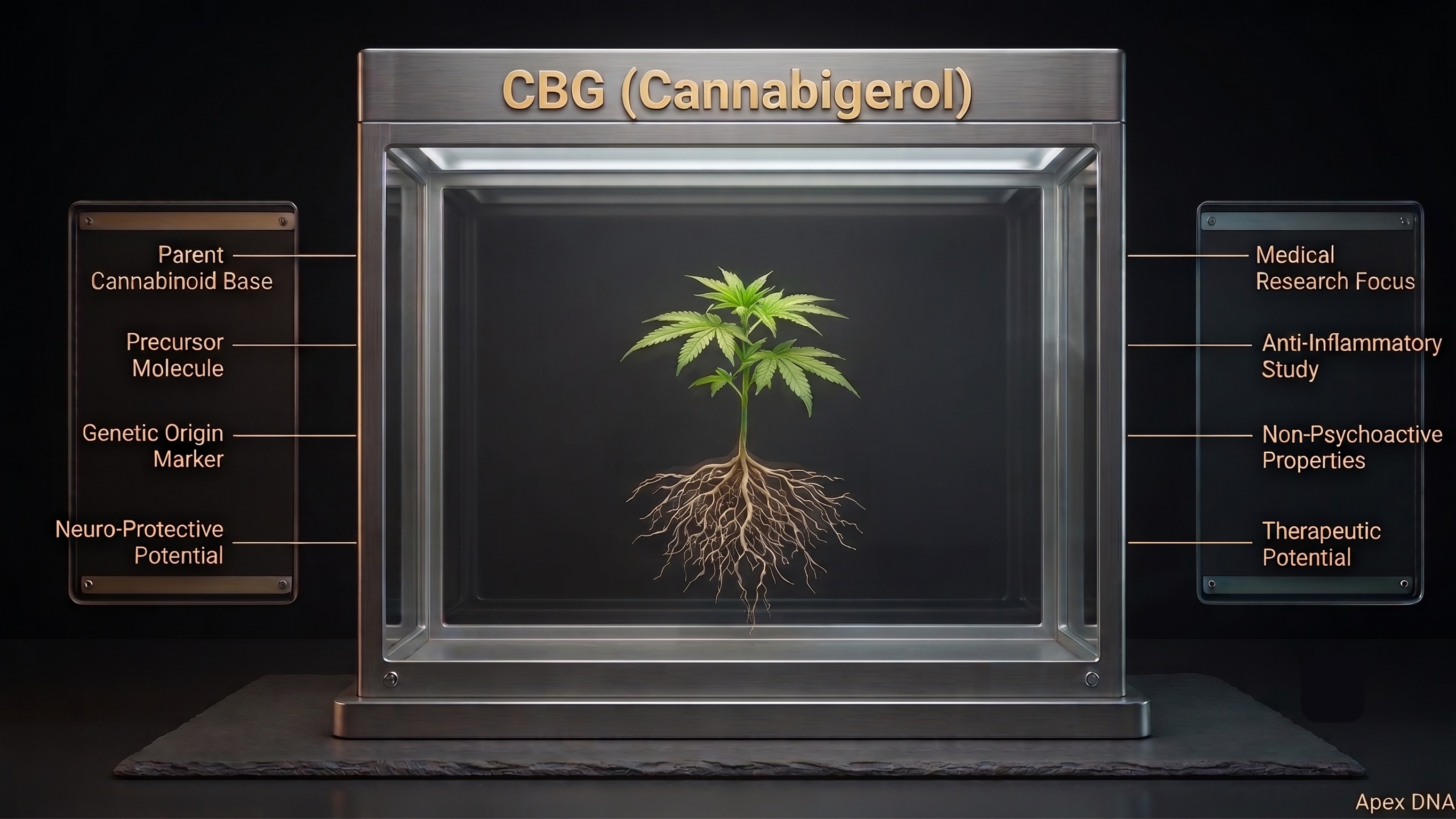
Cannabinoids are compounds the plant produces in its trichomes. CBG is often called their precursor — the parent molecule from which the others form as the plant matures. THC and CBD develop along different enzymatic paths, and which one dominates is set largely by genetics.
Why the ratio is a genetic marker
A line's cannabinoid ratio — THC-dominant, CBD-dominant, or rich in CBG — is a heritable chemotype. It's one of the traits a breeder stabilizes, so that a variety expresses the same balance generation after generation. On our cards you'll see these figures listed precisely because they're part of a line's identity, alongside its terpene profile.
The Swiss framework
Context matters: Swiss genetics are developed within a legal framework that keeps THC low. That constraint has made CBD- and CBG-forward lines a genuine field of work — chemotypes selected and stabilized on their own merits, not as an afterthought. It's one reason provenance and documentation sit at the centre of our heritage collection.
- THC-dominant: the classic profile of many heritage lines.
- CBD-dominant: a distinct chemotype, stabilized in its own right.
- CBG-rich: rarer, prized by collectors for its scarcity.
Compare the profiles across our genetics in the catalogue, or trace how they run through families in the lineage map.